For most of medical history, getting care meant going somewhere — a clinic, a hospital, a waiting room. Telehealth changes that. It lets care travel to the patient instead of the other way around, and it’s quickly becoming a standard part of how modern healthcare works rather than a backup option.
So what exactly is telehealth, why does it matter so much right now, and what does it mean for hospitals and doctors? Let’s break it down.
What is telehealth?
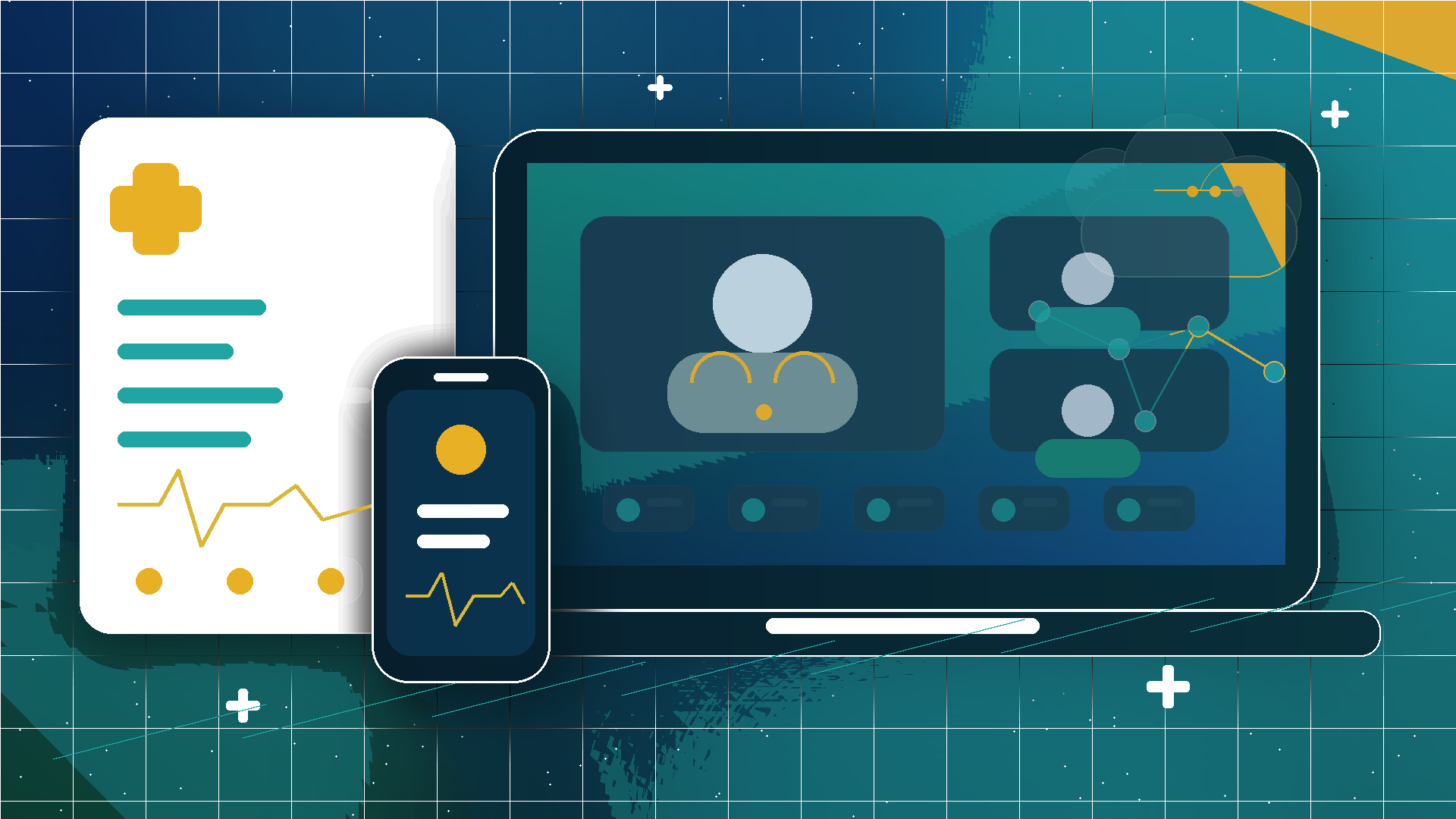
Telehealth is the delivery of healthcare services using digital communication technology — video calls, messaging, remote monitoring, and connected health platforms — rather than requiring an in-person visit. It covers a wide range of care:
- Virtual consultations, where a patient and doctor meet over video instead of in an exam room.
- Remote monitoring, where data like blood pressure, glucose levels, or heart rate is tracked from home and shared with care teams.
- Follow-ups and check-ins, handled quickly online without the patient needing to travel.
- Secure messaging and digital records, so patients and providers can stay connected between visits.
In short, telehealth uses technology to make care more accessible, more continuous, and less bound by physical location.
Why telehealth matters now
Telehealth isn’t new, but several forces have pushed it from a convenience to a necessity.
Access to care is uneven. Many patients live far from hospitals, struggle with mobility, or simply can’t take time off work to sit in a waiting room. Telehealth removes the distance barrier and brings care to people who might otherwise go without it.
Patients expect digital convenience. People now bank, shop, and work online. They increasingly expect their healthcare to offer the same flexibility — and providers who can’t deliver that risk falling behind.
Chronic conditions need continuous care. Conditions like diabetes, hypertension, and heart disease are best managed with regular monitoring, not occasional visits. Telehealth makes ongoing care practical and sustainable.
Healthcare systems are under pressure. Crowded facilities, staff shortages, and rising costs mean providers need to do more with less. Telehealth helps by handling routine care remotely and reserving in-person resources for those who truly need them.
Together, these shifts have made telehealth a core part of how forward-looking healthcare is delivered.
Advantages for hospitals
For hospitals and healthcare facilities, telehealth isn’t just patient-friendly — it’s operationally smart.
Reduced overcrowding. Routine consultations and follow-ups handled remotely free up beds, waiting rooms, and staff for patients who need in-person attention.
Wider reach. A hospital is no longer limited to the patients who can physically reach it. Telehealth extends services to surrounding regions, rural areas, and underserved communities.
Lower operational costs. Fewer unnecessary in-person visits mean less strain on physical resources, staff time, and administrative overhead.
Better resource planning. With more care flowing through digital channels, hospitals gain clearer visibility into demand and can allocate staff and facilities more efficiently.
Stronger continuity of care. Patients stay connected to the hospital between visits, reducing missed follow-ups, readmissions, and gaps in treatment.
Advantages for doctors
For physicians, telehealth changes the day-to-day practice of medicine for the better.
More flexibility. Doctors can conduct consultations from different locations and structure their schedules more efficiently, reducing burnout from back-to-back in-person appointments.
Fewer no-shows. When a visit only takes a few minutes online, patients are far less likely to skip it — keeping treatment on track.
Faster follow-ups. Quick virtual check-ins let doctors monitor recovery and adjust treatment without forcing patients to schedule full visits.
A complete patient picture. With digital records and remote monitoring data at their fingertips, doctors make better-informed decisions at the point of care.
More time for complex cases. By handling routine matters remotely, physicians can devote more in-person attention to patients who genuinely need it.
Where MCare App comes in
Telehealth only works as well as the platform behind it — and that’s exactly what MCare App provides. Developed by MUST Pvt. Ltd., MCare App is a cloud-based healthcare management solution that brings telemedicine together with everything else a provider needs to run smoothly: electronic health records, patient management, and actionable insights, all in one connected system.
Rather than bolting a video tool onto a disconnected workflow, MCare App makes telehealth a natural part of how your practice operates.
Advantages of telehealth with MCare App
Everything in one place. MCare App connects telemedicine directly to patient records, so a virtual consultation isn’t a standalone event — it’s fully integrated with the patient’s history, notes, and care plan.
Access from anywhere. Because MCare App is cloud-based, doctors and staff can deliver and manage care securely from any location, on any device, with information that’s always up to date.
Seamless patient management. Scheduling, consultations, and follow-ups flow through a single platform, so patients move smoothly from booking to virtual visit to ongoing care without anything slipping through the cracks.
Smarter decisions through insights. MCare App turns the data generated by every visit — in person or virtual — into clear insights, helping hospitals and doctors understand trends and improve care.
Scales with you. Whether you’re a single clinic or a multi-location facility, MCare App grows alongside your practice without forcing you to rebuild your systems.
Less administrative burden. By automating routine tasks and unifying workflows, MCare App frees your team to focus on patients instead of paperwork.
The bottom line
Telehealth has moved from a nice-to-have to a defining feature of modern healthcare. It expands access, eases pressure on hospitals, and gives doctors a more flexible, efficient way to practice. But its real power is unlocked only when it’s part of a connected, well-designed platform.
That’s what MCare App delivers — telemedicine built into a complete, cloud-based healthcare management solution, so your practice can offer the care patients expect today while running more smoothly behind the scenes.
Ready to bring modern telehealth to your practice? Get in touch with MUST Pvt. Ltd. to learn more about MCare App.